An Estate Cleanout Checklist for Pinellas County Families
An estate cleanout can involve more than a house full of furniture. Family decisions, personal belongings and a deadline can all compete for attention. A room by room plan helps make the removal work easier to review without rushing decisions about what matters.
This checklist focuses on organizing the physical cleanout. Decide who can approve the work and which items can be removed before asking a hauling crew to load them.
Start with the decisions only your family can make
Choose one person to communicate the agreed removal list to the crew. Make sure everyone involved knows which items are staying and which decisions are still open. A cleanout team can remove the agreed contents, but it should not have to guess whether a family member wanted a particular cabinet or box.
Set aside photographs, personal papers, keys, jewelry and other small belongings before the main removal. If a drawer or container has not been checked, mark it for review rather than treating it as ready to go.
Give every room a simple inventory
A short list is enough to begin. Record large pieces, approximate box counts and any unusually heavy items. Photograph the room from more than one angle so furniture behind other furniture is included.
- Living room: sofas, recliners, tables, televisions, lamps and shelving.
- Bedrooms: mattress sizes, box springs, bed frames, dressers, wardrobes and nightstands.
- Dining room: table size, chair count, hutches, china cabinets and sideboards.
- Kitchen and utility areas: loose contents and appliances included in the agreed scope.
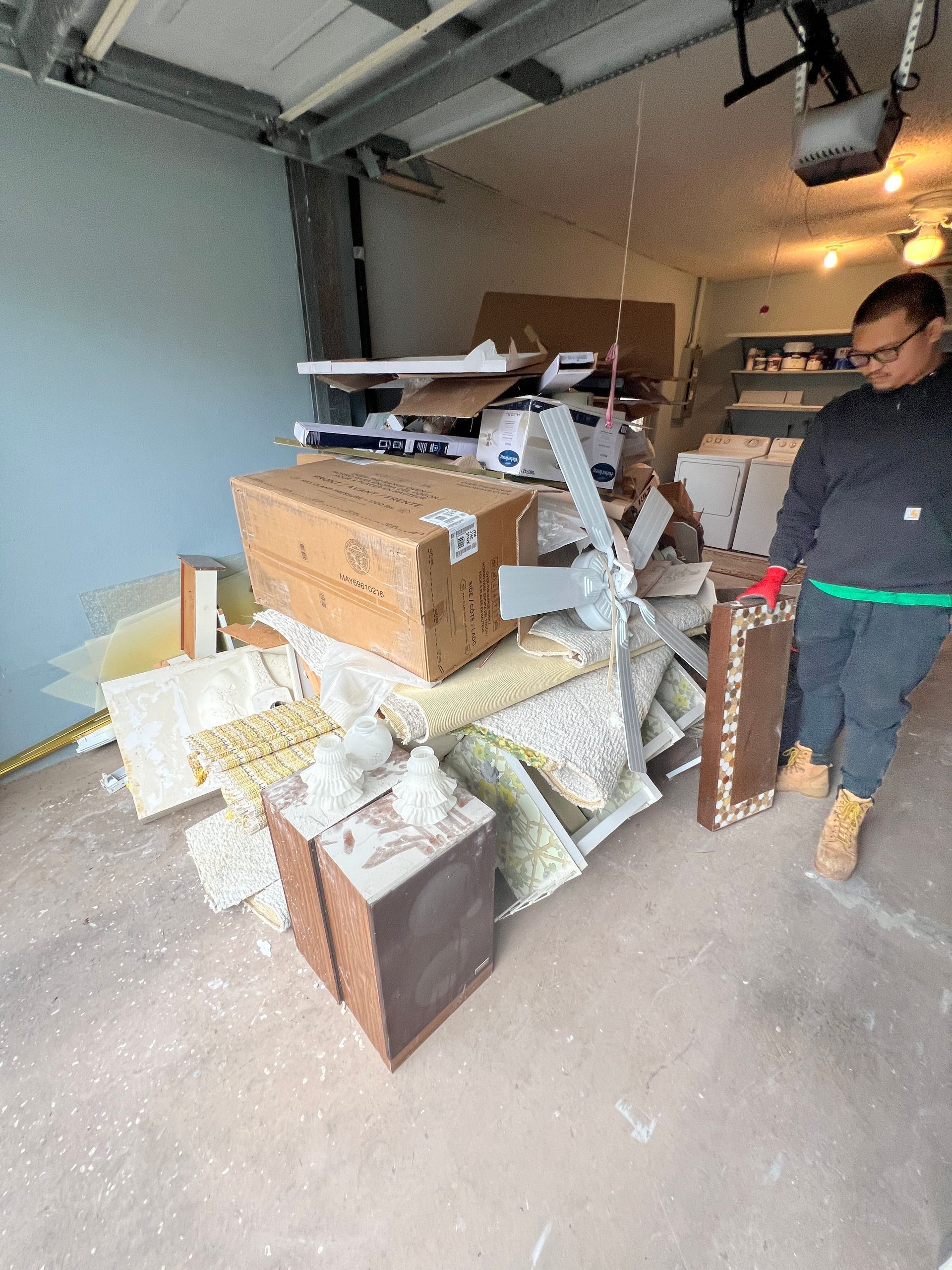
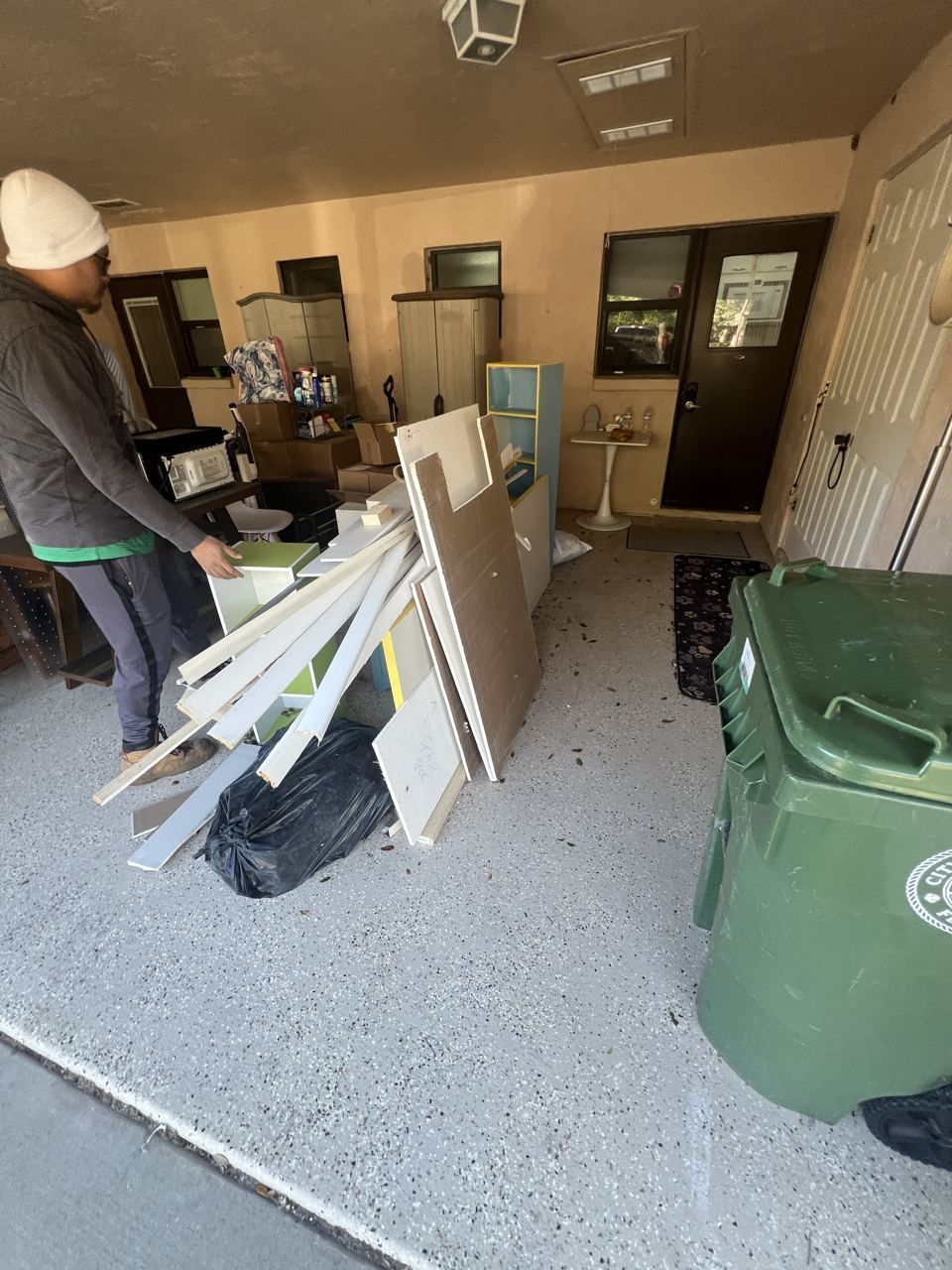
- Garage and outdoor areas: stored belongings, tools, yard items and other separate piles.
There is no need to count every small object before requesting a discussion. Wide photos and a clear description are more useful than a list that leaves out entire rooms.
Separate keeping, giving away and removal
Use clearly marked areas or labels for belongings that are staying, being collected by someone else, or going with the cleanout crew. Schedule family collections so they do not overlap with loading the same room.
If you want reusable belongings considered for donation, discuss that before the pickup. Condition, the type of item and receiving organizations' acceptance policies can affect the options. Do not assume every usable item has an available donation destination.
Explain the access and timeline
Tell us about stairs, elevators, narrow doors, gates and parking. A full property cleanout can involve repeated trips between rooms and the loading area, so the route matters as much as the room count.
If the property is a condo or part of a managed community, check the building's pickup procedures. Share any required appointment windows or loading arrangements with the team. Give the actual deadline and ask us to confirm availability rather than assuming immediate service.
Keep demolition separate from loose contents
Removing a dresser is different from removing attached cabinets or flooring. If the property also needs fixtures, carpet, tile or a shed taken out, identify that as a separate part of the project. It helps us distinguish property cleanout work from light demolition .
Flag pianos, pool tables, unusually heavy pieces and materials that need special review. Send photos before scheduling so the equipment and loading plan can be discussed.
Agree on the scope before loading
Walk through the keep and removal lists with the crew. Point out anything that must remain, including items stored inside furniture. Confirm the final price and agreed work before loading starts.
A website estimate is a planning tool, not a final commitment. Photos, access and the actual contents help our crew verify the quote.
Get help with the removal work
Read about Garbage Kings estate cleanouts or request a quote with your room photos and timeline . For a first conversation, call 727-516-9867 . You can also use the junk removal estimate builder to organize common items.